A few years ago, the journey from “I saw it in a reel” to “it is in my hand” for a 20-year-old in a hostel went: screenshot it, forget it, see it again, search Amazon, read reviews, add to cart, wait four days, miss the delivery because of a lecture, collect it from the guard. Most products died somewhere in that sentence.
Then Blinkit, Zepto and Instamart put a dark store within ten minutes of nearly every hostel, PG and college gate in the big cities, and the sentence became: see it, tap it, it is here. The product that gets tried is now the product that is on the app. For brands selling to Gen Z, this is the single biggest change in the mechanics of trial since UPI, and most youth marketing plans have not caught up.
The 10-minute reflex
Quick commerce started as groceries and became everything: snacks at 1 a.m., a charger before an exam, a face wash because a creator mentioned it, a birthday cake for a hostel mate at midnight, condoms, cold brew, a phone case, a deodorant before a date. The category expanded into exactly the impulse purchases that Gen Z makes and millennials plan.
The behaviour that formed around it is what we call the 10-minute reflex. A want appears, the app opens, the thing arrives, and the whole loop closes before the want has a chance to be argued out of. For a marketer this collapses the funnel. Awareness, consideration and purchase used to be separate stages with separate media. For a quick-commerce-listed product they can happen inside one reel and one tap.
That means the reel is the shelf. Our creator UGC briefs for q-commerce brands now end with the app, not the brand: “available on Blinkit and Zepto, search for it” is a call to action that converts within the hour.
What changed: impulse, sampling and the 2 a.m. order
- Impulse became the main event. A product that used to need a planned shopping trip now gets bought on a whim after a creator reel or a friend’s recommendation, with no comparison shopping if it is on the app and the price is not insulting.
- Late-night demand became visible. Hostels and PGs order between 10 p.m. and 2 a.m. in volumes that would surprise any brand manager who sleeps at 11. Snacks, beverages, personal care and anything exam-related peak there.
- Trial got cheap for the buyer. A ₹99 to ₹299 product delivered in ten minutes is a low-risk experiment. Gen Z runs a lot of these experiments. Brands with a small, cheap, single-use SKU on the app get tried far more than brands with only a ₹799 full-size.
- The pooled order became a channel. The hostel floor group orders together to clear the free-delivery threshold. One person’s choice becomes six people’s trial.
- Listing became distribution. A D2C brand that is only on its own website and on marketplaces is invisible at the moment of impulse. Being on the quick-commerce app in the right pin codes is now a youth marketing decision, not just a sales decision.
Hostels and PGs are quick commerce’s best customers
Walk past any hostel gate in Bangalore, Pune, Hyderabad or Noida at 11 p.m. and count the delivery bikes. The density of 18 to 24 year olds with no kitchen, no car, no parents and a UPI app makes a hostel cluster the most valuable pin code a quick-commerce dark store can serve.
Brands should treat these pin codes the way FMCG used to treat key modern-trade accounts. Make sure the SKU is stocked there, make sure the listing has the creator content on it, run the app-side promotions there, and time them to the campus calendar: end-sems, fest week, the week after placements when money arrives. A campus marketing programme tells you which weeks matter in which city, and a quick-commerce promo in the same week closes the loop on the ground.
The hostel floor WhatsApp group at midnight is now a retail outlet. Stock it.
Sampling in the age of Blinkit
Traditional sampling for youth brands meant a stall at a fest, a sachet in a goodie bag, a promoter at a mall. It still works, and we still run a lot of it, but it has a problem: the sample and the purchase are separated by time and place. The student tries the product on Saturday at the fest and has no idea where to buy it on Tuesday.
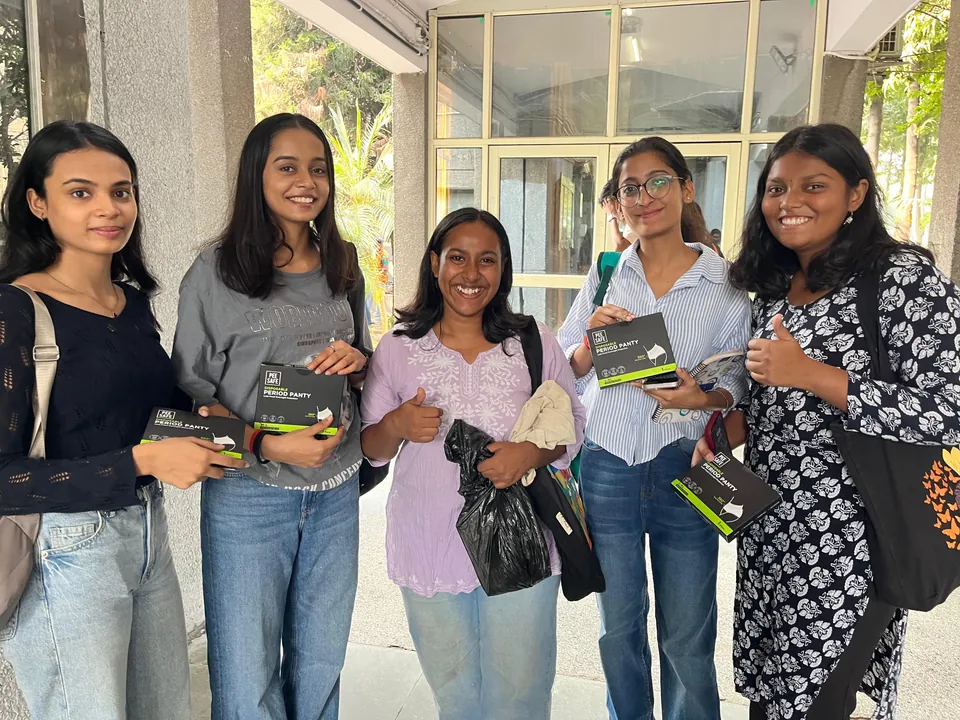
Quick commerce fixes the second half. Sampling now works best as a two-step: product in hand on campus, with a code that gives a discount on the app, and the app already stocked in that campus’s pin code. Trial on Saturday, repeat on Tuesday at 11.40 p.m., tracked by the code. That is how our sampling and activations work is now planned by default for any brand that has a quick-commerce listing.
The other sampling model is to use the app itself: a free or ₹1 sample SKU bundled into the app’s basket for the right pin codes during the right week. Expensive per unit, extremely precise, and the feedback loop is a day, not a quarter.
How D2C and FMCG brands should plan trial around quick commerce
- Make a trial SKU. A small, cheap, single-use or travel-size version at an impulse price point. If it does not exist, the 10-minute reflex passes you by.
- Get listed in campus pin codes first. Before the national rollout, before the metro-wide push. Map the hostels, PGs and college clusters in your top cities and make sure the dark stores serving them stock the trial SKU.
- Put creator content on the listing and in the feed in the same week. The reel creates the want, the listing is where the want lands. Gaps between the two are where sales leak.
- Run campus sampling with an app code. Product in hand, code on the pack or the ambassador’s card, discount on the app, pin code stocked. One campaign, two purchases.
- Time promotions to the campus calendar. End-sems for stimulants and snacks, fest week for beverages and personal care, post-placement weeks for anything over ₹500.
- Build pooled-order offers. Threshold deals that reward the hostel order, communicated through ambassadors into the groups where pooling happens.
- Track by code and pin code, not by platform. You will never get user-level data from the app. You will get pin-code-level sales and code redemptions, and that is enough to see which campuses, which creators and which weeks worked.
The content layer: the unboxing happens at the door
One underrated consequence: the moment of delivery is now content. The product arrives at the hostel door in a paper bag ten minutes after a friend recommended it, and the first thing a 20-year-old does is film it. The quick-commerce unboxing reel is a genre, and brands that design for it (a pack that looks good in a bag, a small card inside with a joke and a code, a reason to film the first use) get a second wave of UGC for free.
This is also where the FMCG and D2C playbooks diverge slightly. FMCG brands with wide distribution use quick commerce for the late-night impulse layer and the trial SKU. D2C brands, which often have no physical shelf at all, should treat the quick-commerce listing as their primary shelf for Gen Z, and spend their influencer marketing accordingly.
What not to do
- Do not run a creator campaign for a product that is not on the app in the cities the creators are from. The want has nowhere to land.
- Do not treat quick commerce as a sales channel only. It is a trial channel, a sampling channel and a content channel, and the teams need to be in the same room.
- Do not price the trial SKU as a mini version of the full price. It has to be a no-brainer at 1 a.m.
- Do not ignore the non-metro cities. Quick commerce is spreading through Indore, Lucknow, Jaipur and Chandigarh, and the campus clusters there are less contested than Mumbai’s.
- Do not forget the pull-through. After trial, the full-size has to be findable on the same app, or the second purchase goes to whoever is.
We built our Gen Z marketing approach around a simple idea: the campus is where the want gets made and quick commerce is where it gets closed. We have run campus and sampling programmes for brands like ITC, EatSure, Pee Safe and Bombay Shaving Company, and the brands winning Gen Z in 2026 are the ones planning both halves together. If you want a Gen Z marketing agency that already knows which hostels order what at midnight, that is us.
FAQ
How has quick commerce changed Gen Z marketing in India?
It collapsed the gap between seeing a product in a reel and trying it to about ten minutes, so the reel is now the shelf and trial depends on being stocked in campus and hostel pin codes.
How should D2C brands run sampling with quick commerce?
Pair on-campus sampling with an app discount code and make sure the trial SKU is stocked in that campus’s pin code, so trial on campus turns into a tracked repeat order; see our sampling and activations service.
Which products do Gen Z buy on Blinkit, Zepto and Instamart?
Snacks, beverages, personal care, chargers and exam-week essentials, mostly between 10 p.m. and 2 a.m. from hostels and PGs, often as pooled orders to clear free-delivery thresholds.