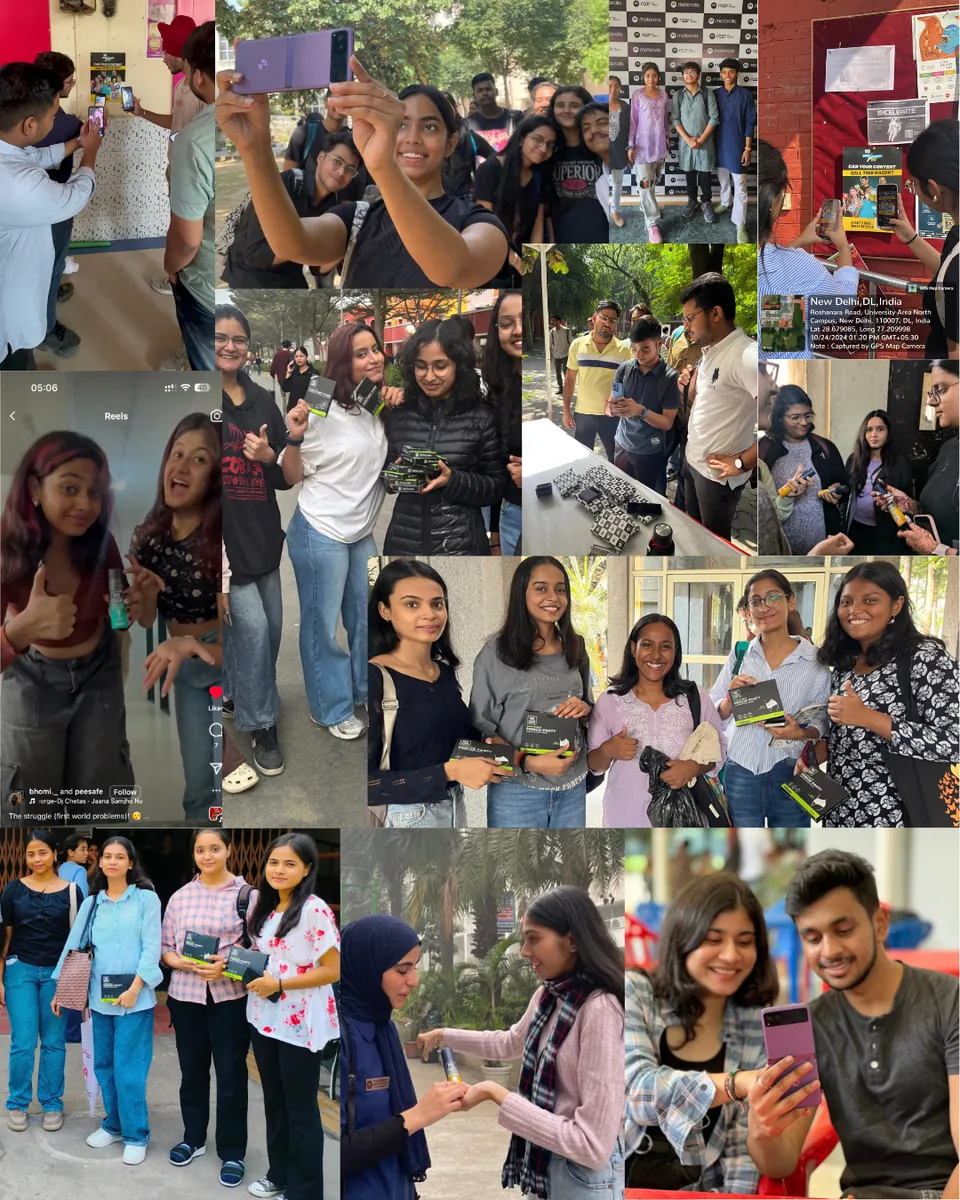
Most briefs we receive asking for a Gen Z marketing strategy are really asking for a reel. A brand has a product, a launch date and a vague worry that 20 year olds are not noticing it, and the fix on the table is “let’s do something on Instagram”. That is a tactic. A Gen Z marketing strategy is the set of decisions you make before the first reel is shot: who exactly you are talking to, where they already are, what you want them to do, and how you will know it worked.
This is the framework we use at the start of every Gen Z marketing engagement, refined over 250+ campaigns. It has seven steps. None of them is clever. All of them get skipped.
Steps 1 and 2: pick a segment, then map where it already is
Roughly 375 million Indians were born between 1997 and 2012. Nobody can market to all of them at once, and a plan that tries ends up talking to nobody. The first decision is which slice: first-year students in hostels, final-year students staring at placements, 24 year olds in their first job in Gurgaon, or 19 year olds in a tier-2 city who have never owned a credit card.
Each slice has a different wallet, a different language and a different hour of the day when it buys. A fintech app talking to the first-job segment should sound nothing like a snack brand talking to hostel wings. Write the segment down in one sentence, with a city and an age range, and let that sentence veto every idea that follows.
Then map where that segment already spends attention. Gen Z in India is not hard to find: roughly 43 million higher-education seats, 10K+ colleges across 200+ cities, WhatsApp groups of 300, Instagram reels at midnight and quick-commerce apps ten minutes later. The mistake is building a new place and asking them to come to it. Nobody is joining your brand’s Discord. List the five places they already are and rank them by how much a brand is allowed to show up there. Campus fests welcome brands. Hostel group chats do not, unless a student brings you in. That ranking tells you which channels are paid, which are earned and which are off-limits.
Step 3: decide the one action you want
Awareness is not an action. A Gen Z campaign should be built around one thing a 20 year old does with their thumb: install, sign up, order on Blinkit, redeem a code, join a community, post a reel. Pick one. Everything upstream, the creator brief, the campus activation, the sampling drive, exists to make that one action more likely.
This is also where the Gen Z brand strategy work earns its fee. If you cannot explain in one line why a student should do the action instead of ignoring you, the problem is positioning, not media. Fix the line before you buy reach for it.
Step 4: build the channel stack in the right order
Here is the order that has worked for us, from the densest and cheapest reach outwards. Each layer feeds the next: campus produces the people and the content, creators scale the content, community keeps the people, and paid amplifies whatever has already proved it works.
- Campus marketing: ambassadors, society tie-ups, fest activations and hostel sampling, timed to the August to March fest calendar.
- Creators: nano and micro creators cast by city and language, briefed in Hinglish or the regional language they actually post in.
- Creator UGC with usage rights, so the best reels can run as paid ads instead of a studio shoot.
- Community: WhatsApp and Instagram groups seeded by ambassadors, given something forwardable every fortnight.
- Paid amplification, last, pointed only at creative that already earned shares organically.
Brands that start with paid and bolt on campus later end up paying twice: once for cold reach, and again for the trust they could have built for less.
Step 5: set the calendar by semesters, not quarters
Gen Z India runs on an academic clock. Admissions and orientation in July and August, fest season from September to March, a dead zone during end-semester exams, and a long summer when hostels empty out and attention moves home to tier-2 towns. A strategy that launches in the second week of December because that is when the budget cleared will land in an exam hall.
Plan two sprints a year around the two semesters, with a lighter summer layer for internships and home towns. A D2C brand launching in Mumbai colleges in late August catches orientation week, fresher parties and the first fest sponsorships in the same month.
Step 6: measure one funnel on one dashboard
The surest sign that a plan is going to fail is three agencies with three reports. Campus reach in one deck, creator impressions in another, installs in a third, and nobody able to say what one retained user cost. Build the measurement before the campaign: unique codes per ambassador and per creator, UTM links on every reel, a weekly view of reach, participation, action and retention.
Reach tells you the plan was seen. Participation tells you it was wanted. Action tells you it worked. Retention tells you whether the people it brought were the right people. Report all four or you are reporting vanity.
Strategy is the list of things you refuse to do. If every channel is in the plan, there is no plan.
Step 7: a Gen Z marketing strategy is also a list of refusals
The last step is subtraction. No celebrity, because the segment does not believe them. No English-only creative outside the metros. No one-off stall with no follow-up. No broadcast channel nobody asked for. No values claim the product cannot back up. Every one of these is a budget line somebody will propose, and the strategy exists to say no in advance.
Write the refusals into the document next to the plan. When a new idea arrives in week six, and it will, the team checks it against both lists instead of against whoever is loudest in the room.
If you would rather start with the colleges, creators and communities already in place, that is what a Gen Z marketing agency is for. Either way, do the seven steps on paper first. A good strategy makes the reel obvious. A good reel never makes the strategy obvious.
FAQ
What should a Gen Z marketing strategy in India start with?
One segment sentence (age range, city, wallet) and one action you want them to take, before any channel or creative decision; our brand strategy work starts there.
Which channels matter most for Gen Z in India?
Campus, nano and micro creators, and WhatsApp communities, layered in that order, with paid media amplifying only what already worked organically.
How do you measure a Gen Z marketing strategy?
On one dashboard with four stages, reach, participation, action and retention, which we explain in how to measure Gen Z campaigns.